• Home
  • About
  • Archives
  • Authors
  • Contact
  • Polls
  • Small Biz Interviews
 

Archive for the ‘News’ Category

Championship Sports Teams… What Do They Teach Us for the Small Business & Startup Arena

Friday, June 24th, 2011

In the past month, we experienced two of the most exciting Finals’ in recent history in both the NBA and NHL. In the NBA, the Dallas Mavericks destroyed the three-headed monster called the Miami Heat in a thrilling upset, winning the series 4-2. Meanwhile in the NHL’s Stanley Cup, the Boston Bruins came back from being down 3-2 and defeated the Vancouver Canucks on the road in Game 7, concluding an electrifying series (USA!!).

Both the Mavericks and Bruins exemplified great team work which strongly contributed to their respective championships, while the Heat and Canucks both had their weaknesses and choke-artists. In retrospect, certain characteristics of these teams can translate into the business world with regards to small business teams’ and their respective success.

First and foremost, small business teams need to be dedicated to their success while not being afraid of taking risks, committed to doing whatever will benefit their team or business the most.

Before this season, 33 year old veteran Jason Terry of the Mavs had gotten a tattoo of the Larry O’Brien Trophy, given to the winner of the NBA Championship, on his right bicep.  The tattoo of the trophy he yearned so deeply for but had never yet received was a huge gamble, being placed there to motivate himself and his fellow teammates. As a veteran and captain on the team, along with their star Dirk Nowitzki, Terry made the bold move prior to the season and sealing the deal at the end brands it one of the most epic tattoos in history.

However, Daniel Sedin didn’t have the same boldness and confidence in the Stanley Cup Finals, but rather destined his team for failure. Like former New York greats Joe Namath and Mark Messier have done in the past, Sedin staunchly guaranteed a Canucks Game 7 victory on their home ice. While being an extremely daring move, the guarantee demonstrated his trust in his team and motivated them all to perform better. In the business world, every associate must trust and help his/her co-workers, whether it be in group projects or in learning new strategies, in order to maintain an efficient organization. Yet hours before game-time, Sedin rescinded his guarantee, saying that it was the excitement after his team’s 5-2 loss, and the “words came wrong out of my mouth.” WHAT!? After hearing that, I knew the Bruins had the game, and therefore the series, in the bag. Successful teams have good chemistry and are adept to taking risks, doing whatever is the most beneficial. Once teams lose faith in themselves like Sedin had, they lose faith in their product and talent, and therefore I “guarantee” the business will then collapse as a whole.

Another common trait of winning teams and successful businesses is having players stepping up at opportune times and others performing well under pressure, leading to an overall positive team chemistry.

This was most evidenced by the play of the Bill Russell NBA Finals Most Valuable Player Award winner Dirk Nowitzki. Throughout the entire playoffs, Dirk had stepped up his game and nothing says clutch more than Dirk’s winning baskets in both Games 2 and 4. Down 15 in the 4th quarter in Game 2, Dirk revitalized the Mavs offense and scored his team’s final 9 points, making the game-winning layup with 3.6 seconds left. Similarly, while fighting through a 102 degree fever, he again sealed the game with 14.3 seconds remaining in Game 4. Nothing is more important to a business than its major player stepping up in times of need and doing whatever it takes to succeed. This year’s playoffs solidified Dirk’s ranking as one of the all-time greats in the league, and he finally capped it off with the championship. However, every member of the team contributed to and played a significant role in the winning effort, from aging point guard Jason Kidd, to big man Tyson Chandler, and even to The Janitor, Brian Cardinal.
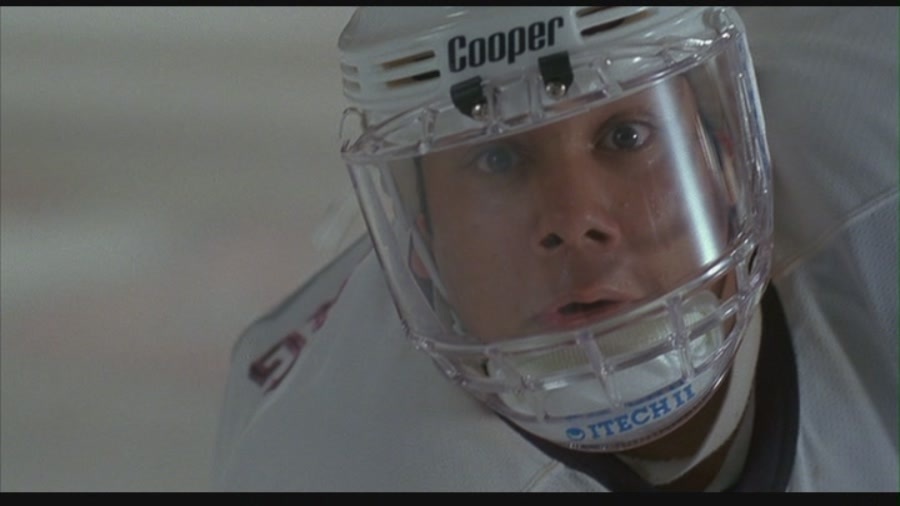
At least Goldberg came through clutch at the end

On the losing front, the Lebron James collapse (for the second time, see here) is probably the most shocking and talked about story of the entire NBA Finals. We have all been witnesses to possibly the best player of our generation, yet he has continued to fail to do what matters most: WIN. After disparagingly taking his “talents to South Beach” (more info here), the best player in the world still managed to breakdown in the fourth quarters of the game. When his team needed him the most, he was inept at hitting his stride, often taking the challenging jumper as opposed to his usual forcing his way towards the basket. He was more hesitant to shoot than Goldberg at the end of D3: The Mighty Ducks, and instead of using his talent and coming through clutch like Goldberg, he often chose to pass to his wingman Wade in the shadows of defeat. Businesses should not aspire to be like Lebron, executing flawless planning and strategizing of your product, but actually failing when it matters and comes down to attracting customers and selling your product. Instead, be like Mike.

In the Stanley Cup Finals, the Bruins managed to win the Cup by relying on the stellar performance of its goaltender, Tim Thomas (we’ll get to him later), while playing physical, unselfish, fast-paced hockey and getting contributions from both their stars and young talents. The Bruins weren’t the more talented team in this series, going up against the likes of the Sedin twins and other offensive stars such as Ryan Kesler and Alexandre Burrows. But they played with more intensity and far greater chemistry than the Canucks, bringing Boston their first Cup victory in 39 years. Their most valuable player excluding their goaltender was rookie Brad Marchand, a quick, energetic spark who always made his presence known when he was on the ice despite his 5′ 9″ stature.

In the small business world, teams with greater chemistry and positive morale are more likely to prosper. Similar to the Mavs and Bruins, businesses rely on all of its members as each employee plays an important role. Whether it is the star player like Dirk or the role specialist like Marchand, each complements one another and the entire team cannot function without all of its pieces.

Finally, small business teams must have a stronghold on its safekeeping and security. Companies need to be secure from external threats, such as thieves and online hackers, against their businesses and customers’ personal information and must demonstrate their trustworthiness to their clienteles.

Tim Thomas kissing what is rightfully his

In hockey, the goaltender is considered to be the security for the team, preventing the pucks from going into the net. And nobody has ever done that better than how Tim Thomas did in this year’s NHL Playoffs. Not only did his legendary performance earn him a spot among Boston’s all-time sports greats, but it also landed him in the record books. At age 37, he became the oldest player to win MVP and he recorded the most saves in a Finals with 238 and the most saves in a playoff run with 798, playing every minute of the postseason for the Bruins. All small business teams need their Tim Thomas’s, blankets of security to rely on, something to demonstrate their integrity and creditworthiness. The closest thing to that for online small businesses are trust seals placed on websites, providing assurance that consumer personal information is safe with the companies they are doing business with.

Now we are entering the toughest and worst months of the year… for sports that is. Small businesses come and go regularly, though aren’t as damaging to the population as the conclusion of these two sports are. Of the four major professional sports, we have the dog days of the MLB ahead, with our teams playing games that are often dull and meaningless in the end. And that’s the highlight. We also have the NASCAR Cup Race, Wimbledon for a few weeks until another Rafa-Federer showdown (which is actually very entertaining), and the PGA Tour, but honestly, what’s golf without Tiger? I’m already looking forward to the football season. Oh wait… oh no.

Post to Twitter Tweet This Post

  • Share/Bookmark


Archive for the ‘News’ Category

KikScore’s Online Trust Seal & Confidence Badge for SmallBiz Featured in Business Insider & SmallBiz Technology

Tuesday, June 21st, 2011


We usually try our best to keep this blog about the adventures, challenges and stories of small business and startups and providing tips for the community.  Today, however, is an exception and we wanted to pass along our special thanks to some folks and make our readers aware of KikScore being in the news yesterday.  Our friends including Ramon Ray and Joseph Mutitjo at the fantastic  SmallBiz Technology blog did a feature post covering KikScore and one of our great customers, paybaQ.  That article was picked up at Business Insider as well too so yesterday was a two for one news special for us.

So in case you missed the articles yesterday here is the SmallBizTechnology titled Dealing With Shopping Cart Abandonment Issues? Customers Unsure That They Can Trust Your Business? Consider Trust Seal Provider KikScore.  Also here is the article from Business Insider’s coverage of KikScore.

Lastly, as I mentioned in my comment to the Business Insider article.  If you are a small business or a blogger and would like to try out KikScore for FREE for 60 days, please leave a comment here, send us a tweet to @KikScore on Twitter or post a comment on the KikScore’s Facebook Fan Page.

Special thanks to Ramon and Joseph for taking the time to cover KikScore.  And as always thanks to the community and our fabulous customers for continuing to support and use KikScore!


Post to Twitter Tweet This Post

  • Share/Bookmark


Archive for the ‘News’ Category

Small Business, Big Impact: The Blue Key Campaign

Friday, June 10th, 2011

Nowhere to Go

Can you imagine fleeing from your own country in fear of persecution? What about being forcibly removed from your country? Even though we don’t always see it, the truth is disturbingly clear: refugees are suffering all over the world.

“At the end of 2009, there were 43.3 million forcibly displaced people worldwide, the highest number since the mid-1990s.” Although I wish it weren’t, this statistic is all too true. While tragedy movies continue to pull at our heart strings, we need to realize that fiction is no substitute for the horrors of real life. Not too long ago, Abdullah Omar and his wife Khadija were forced to give up their child just so that she could survive. And this is just one of the startling experiences that have devastated refugees within the last few years!

Image of Refugees at camp in Nyala, South Darfur, UN Photo/Albert Gonzalez Farran

One Step at a Time

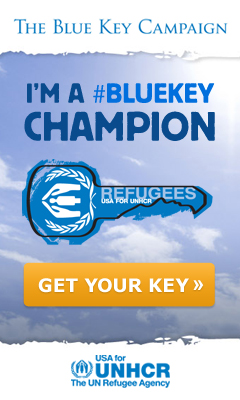
What’s the one thing that these refugee experiences have in common with tragedy movies? Neither of them have to end in tragedy. The USA for UNHCR, a 501 (c)(3) non-profit organization, has been working to raise both awareness and funds in the U.S. for refugees the world over. Their latest project, the Blue Key Campaign, aims to get U.S. citizens to show their support for refugees.

The USA for UNHCR’s Blue Key Campaign can be summed up in their mission statement:

“Our goal is for 6,000 people to get their own Blue Key over the next 6 weeks, to tell UNHCR’s 6,000+ staff that their work matters. Will you be one of them?”

This Blue Key pin or pendant costs only $5 and does far more than its monetary value ever could. Many people all across the U.S. have signed up for a Blue Key and, as of now, the USA for UNHCR is about 33% toward their goal. However, this campaign is about far more than money; it’s about showing support. In addition to getting your own Blue Key, you can:

  • Donate a tweet per day to USA for UNHCR to help raise awareness on Twitter by signing up at www.justcoz.org/UNRefugeeAgency.
  • If you blog, are active online and empathize with the cause, join the campaign as a Champion.

We’ve All Got Our Role to Play

From the USA for UNHCR’s statement, it is obvious what’s being explicitly asked of individuals. But what should businesses do? Of course, it means a great deal when big businesses engage in philanthropic campaigns such as this, but that’s not where this campaign needs to end. If we look at this from the other end of the spectrum, this is where small businesses and startups can really show their true colors.

Before you ask me what this statement means, ask yourself one thing: Can a small amount of money provide great benefits to others? If you’re involved in a small business or startup, you’d better think so. After all, this is pretty much your slogan. Small businesses and startups ask for a little money so that they can use their products and services to help others. Now that the shoe is on the other foot, it’s time to practice that Golden Rule we’ve all heard a million times.

Do to Others…

I leave you to finish this statement, since the choice is ultimately up to you. Small businesses and startups provide innovative products and services to their customers, but there is always more that can be done, in or out of the office. Just as your products and services make life easier for customers, you should strive to perform actions that help the whole world.

If you have the time and $5 to spare, please get a Blue Key and show your support.

Post to Twitter Tweet This Post

  • Share/Bookmark


Archive for the ‘News’ Category

Identity Theft is at a Record High: What This Means in the World of Online Commerce

Tuesday, June 7th, 2011

The News:

According to the Government Accountability Office, taxpayer identity theft has increased fivefold since 2008.  This has become an absolute nightmare for the IRS, especially its criminal investigations division, the division responsible for investigations of of identity theft.  However, even the IRS admits that they “pursue criminal investigations of suspected identity thieves in only a small number of cases.”  In other words, the majority of identity thieves are not prosecuted.  Identity thieves are faced with far too few obstacles and therefore, their crime rates will continue to rise.   And indeed they have risen: there were 248,357 incidents in the 2010 fiscal year, in comparison to the 51,702 in 2008.

The Implications:

The identity theft counts are more than just a mere statistic: these numbers make up a trend that affects more than tax returns.  The rise in identity theft rates mirrors that of other cybercrimes.  Online trust concerns are a direct result of the inability of security solutions in keeping up with rapidly developing technology.  The changing face of technology and cyber commerce make security much more complicated than the situation shown in the comic above.

Giving away any information at all online can pose a risk.  The recent Sony Network breach is proof that even larger, established companies can’t always protect customers’ information.  Personal information obtained from Sony included the names, addresses, email addresses, birthdays, PlayStation Network and Qriocity passwords and user names, and online user handles, of over 70 million customers.

Naturally, people have become more protective of their financial and personal information.   This poses unfortunate challenges for small businesses who are trying to make their mark in the seemingly endless web of the internet.  Customers are extremely reluctant to give away their personal information to lesser-known companies, and therefore, online businesses suffer.  In fact, more than 63 percent of shoppers leave transactions uncompleted because they are concerned about online security.  At an average of $109 in abandoned goods per transaction, online businesses lost $21 billion in the year 2008 alone.

Recent events make it even more imperative that small businesses, consumers, and the government all work together to create a safer shopping environment.  The practice of online commerce is here to stay, so we must all take steps to protect our own information and the information of our customers.  What are you doing to improve online trust concerns?

Image: BrickHouse Security Blog

Post to Twitter Tweet This Post

  • Share/Bookmark


Archive for the ‘News’ Category

Shocking Results in Recent OTA Findings: Should YOU Feel Safe on the Internet?

Friday, May 27th, 2011

As cybercriminals become more advanced and efficient, all businesses must recognize and prepare for the imminent threats of online hackers. The issue of cyber-attacks has made its way to the Senate, debating the amount of power the president should have in dealing with cybercrimes (Full story here).

Similarly, in accordance with the looming threat of online fraud and cybercrime, the Online Trust Alliance (OTA) released their annual Online Safety Honor Roll and Scorecard two weeks ago, revealing the many insecurities of the internet. Their findings were very surprising, making me question my privacy and safety on the internet. Two of the most shocking discoveries include:

  • Only 26% of the top websites and government agencies evaluated by the OTA were recognized for their adoption of the best, most efficient technologies to help protect users’ privacy and identity. This means that 74% of the top websites used by millions of people have not implemented safe measures that protect against malicious emails and rogue websites. Organizations that made the Honor Roll enacted email authentication processes, Extended Validation SSL Certificates, and testing for malware and known site vulnerabilities. More than 500 million emails originated from the organizations lacking efficient online security measures. These facts demonstrate that we are not protected on the majority of sites we visit and are members of, and therefore we must consider reevaluating websites before giving them any of our personal information.
  • Social media, e-commerce, and financial services ranked higher in securing their sites than government agencies.  About 27% of the FDIC 100 and 24% of the Fortune 500 qualified for the Honor Roll, though only 12% of government agencies made the list. It doesn’t make me feel particularly safe that government agencies’ websites are some of the most vulnerable to cybercrime attacks. The government and its various agencies should be the ones protecting us, enacting the proper online security protocols and trying to set an example, not being most susceptible to malware.

This report is extremely important for both e-commerce shoppers and small businesses. Online shoppers must realize the dangers of registering on sites that may be unsafe and prone to cyber-attacks and abuse. Therefore, they will seek out websites that have the proper preventative online security measures, and will most likely buy from the large, reputable online websites. This will in turn hurt small businesses that lack a reputation in online safety, and are trying to flourish in e-commerce.  This makes it even more important that for small businesses to succeed that they clearly demonstrate to the public their record of trustworthiness and reliability so potential customers are ensured that the small business they’re dealing with can be trusted.

The OTA’s full 2011 Online Safety Honor Roll and Scorecard can be found here: https://otalliance.org/news/releases/2011scorecard.html.

Post to Twitter Tweet This Post

  • Share/Bookmark


Archive for the ‘News’ Category

When Young Americans Unite – We Can Do Some Cool Things! – I am Here to Help Small Business for the Summer

Wednesday, May 25th, 2011

Hey guys! This is Jason and I am a new intern here at Kikscore!

I am a rising sophomore at American University, majoring in Business Administration with a double specialization in Accounting and Marketing. I learned a lot my first year at school, especially in my Business 1.0 class. Having intended on just majoring in Business Administration with a specialization in Accounting, this fundamental class introduced me to a variety of business-related fields, especially sparking my interest in marketing. The class emphasized how important of a role the internet plays these days, not just in marketing but in all aspects of business and society.

Take the recent killing of Osama bin Laden, for example. The television news channels most likely broke the news to the adults who were still awake at the time. However, the internet and its many social networking sites informed millions of college students and teenagers around the world of the breaking news. Statuses on Facebook such as “OSAMA BIN LADEN IS DEAD!! AMERICA!!” and “Osama bin Hidein for ten years, now he’s dead BOOYAH!” were appearing on my news feed by the second. In fact, a tweet by a former chief of staff that read “So I’m told by a reputable person they have killed Osama Bin Laden. Hot damn” actually broke the news to the public (this article can be found here:  Twitter Reactions to Osama’s Death) This is a great example of how important and influential the internet is, and how significant it can be for businesses.

However, I first found out about Osama’s killing from shrieks and yells coming from the hallway of my dorm. Even though I am not political whatsoever, I do attend a school that is revered for its politically active student body. (I am also an avid sports fan and we don’t have a football team, but I love it! Go figure.) And one of the many perks of going to school in DC is the fact that I am only 15 minutes away from the nation’s capital. So that night, I went to the White House with a large group of friends, joining the thousands of Americans already there to celebrate, singing the national anthem probably about 50 times.

My favorite rapper Kanye West puts it best by saying that he is the “voice of this generation.” Maybe I’m not rich or famous like Kanye, but I believe I am also the voice of this generation. Times are changing and with the evolving power of the internet and media, we are all the voices of this generation. After hearing about Kikscore, I was immediately interested in joining this small, internet business and I am excited to use what I have learned in Business 1.0 to help here. I am eager and ready to gain first-hand experience and practice with this rising online start-up.

Post to Twitter Tweet This Post

  • Share/Bookmark


Archive for the ‘News’ Category

Taking the Internet Back for the People: The Government’s Plan for Internet Security

Thursday, May 19th, 2011

Not too long ago, the U.S. federal government finalized their National Strategy for Trusted Identities in Cyberspace (NSTIC). Although acronyms tend to make everything sound overly-official, this isn’t some new set of laws. Instead, this ‘strategy’ is more of an attempt to improve internet safety. NSTIC aims to make the internet a better place for everyone to store and use their personal information. Sounds kind of impossible, right? If this was some sort of strictly government attempt, it probably would be. However, NSTIC asks for the participation of businesses and consumers alike, actually giving it a pretty good shot.

What’s the Strategy?

As explained in more detail here and here, NSTIC is focused on three main issues:

  • Identity – Anyone who uses the internet probably has a jumble of user names and passwords. Attempting to foster an “identity ecosystem,” NSTIC aims to simplify this issue by having users deal with only a select few identities from trustworthy sources.
  • Privacy – Whenever we sign up or buy something online, we give out tons of personal information. The plan regarding NSTIC is very much on a ‘need to know’ basis. Under this, only necessary personal information will be shared with the interacting group; no more, no less.
  • Security – If we have less accounts to create, then we can actually create them distinctively. After all, how many people use the same user names and passwords across multiple accounts? In short, a lot! This makes online theft too easy. Hopefully, this proposed ecosystem will eliminate that.

In the end, it’s best to look at NSTIC as more of a reform than another government headache. It aims to create a more tightly knit hold on the online sharing of personal information.

Who Ya Gonna Call?

Sorry to upset you, but no one in particular. As I said earlier, NSTIC isn’t a law; it’s a recommendation. It calls upon all of us to do our part in improving our security online. I’m sure we all love to complain about incidents such as Sony’s Playstation Network being hacked. However, are there any particular networks or sites where we are 100% safe of theft? Businesses need to keep client information private, but we can’t just use easily accessible usernames and passwords with the expectation that they will take care of the rest.

NSTIC wants to fix these problems by making the online process simpler, and it wants everyone’s participation. If you really want to be cheesy about it, NSTIC has a ‘think of the children’ kind of feel. The process isn’t going to happen overnight. It’s a grand scale issue that will probably take decades or even generations. And yet, even in spite of its inevitably gradual process, isn’t there no time like the present to get started?

Post to Twitter Tweet This Post

  • Share/Bookmark


Archive for the ‘News’ Category

Internet Explorer 9 “Do Not Track” Security Feature…Will it Really Work?

Wednesday, March 16th, 2011

I was reading this article in the Wall Street Journal yesterday when I realized that Microsoft released their new version of their uber popular Internet Explorer web browser which included the highly touted “Do Not Track” feature. The new feature is news-worthy for a few reasons in my opinion.  First of all, Internet Explorer is now the first major browser to include this type of feature in a major release of their we browser although Mozilla’s Firefox browser is said to include a similar feature in an upcoming release.

I think that this new “do not track” feature is also an interesting advancement because of how quickly Microsoft developed and included this functionality in a major release of their web browser.  This type of new feature only started making news a few months ago when a number of consumer privacy advocates started complaining about how so many websites, like Facebook and others, are now collecting personal information about people and their web browsing habits when they visit their websites.  Microsoft and Mozilla took these requests so seriously that they decided to include this feature in their next browser releases only a quarter later.  In my opinion these web browser companies decided to include this feature so quickly because they knew it was relatively easy to implement (in the way they have) and they also knew that this new feature would make big news and would therefore help market their new releases.

Finally, I think this new web browser feature is of note because of the way it has been implemented technically may not be very effective at doing exactly what it is meant for.  Basically, now when a person using Internet Explorer 9 browses to a web page that is trying to collect information about the person or their computer or their web browsing history it sends a series of “header” records to the requesting website indicating that the person requests that the information not be shared with anyone else or used for marketing purposes.  The only problem here is that there are no set standards around these “header” records and no major websites or eCommerce associations have acknowledged that they will accept or abide by these requests to not share the user’s data.  Inevitably, what will happen here is that Microsoft will start pointing the figure at the eCommerce sites that do not recognize these header records until they cave in and recognize them because Internet Explorer is the most used web browser in the world and nobody wants to fine themselves on the wrong side of this argument because their sites will be bad mouthed in the press and seen as non-consumer friendly.

In conclusion, I think this is definitely a step in the right direction by Microsoft but I am not sure that this is really the best or most effective way to go about it.  I guess if this is just the first step in the direction of better security for shopper’s personal information on the web then it is probably worth it and will probably get us where we want to go. 

What do you think about this new feature that Microsoft started offering yesterday in their new Internet Explorer 9?

Post to Twitter Tweet This Post

  • Share/Bookmark


Archive for the ‘News’ Category

Always feel like you are short on time? Maybe you should take a pay cut!

Wednesday, February 23rd, 2011

I was reading this post on the Wall Street Journal blog yesterday and it really made me think about how some people I know always seem to be stressed out.  After reading this blog and thinking about it a little bit, I really agreed that more often than not it seems like people that make more money in their day jobs seem more stressed out and are always saying they wish they had more time for their personal lives.  While there are likely multiple factors at play in these situations that are making these people feel like this, it seems like there are now a few different studies that are starting to link higher rates of pay to a perceived lack of time in their work and personal lives.

According to this post, there are now multiple studies that have compared a group of people that are paid very little for a day’s work and then another group of people that are paid a much higher hourly rate for the exact same work.  The results of these studies showed that the people that were paid a higher hourly wage felt much more time pressure than the group that was paid less.

I thought that these studies were interesting because they really seemed to show a tangible link between a person’s perception of their value relative to the amount they are paid to complete a task.  Sometimes people put this time pressure on themselves only because of their pay and not because the pressure to complete the task really exists.

Looking back on it now, have you ever felt like you put too much pressure on yourself to complete a task for your business when this pressure may have never really existed?

Post to Twitter Tweet This Post

  • Share/Bookmark


Archive for the ‘News’ Category

Try Shopkick on Your Smartphone, Almost 1 Million Others Have!

Wednesday, February 2nd, 2011

I have been using the Shopkick application on my smartphone for the past few months and then I saw this article in the Wall Street Journal the other day and realized that 750,000 people have also downloaded and used the application since it was released in August.

Basically, the idea behind the Shopkick application is that users can login and see which local retailers are closest to their current location.  Users then also have the option on clicking on each of the retailers near them to see what specials the merchant is currently offering to Shopkick customers.  It seems like some of the larger retailers that have close relationships with Shopkick include Best Buy, Macy’s, and Sports Authority.

The other idea behind the Shopkick application that is used to encourage users to access the application daily is driven by rewarding users with Shopkick points just for viewing the retailer’s specials by using the Shopkick application on their smartphone.  Users can obtain additional points by physically visiting the retailers and checking in and also by scanning the barcodes of various products in the stores that the retailers are advertising.  Shopkick users can then redeem these Shopkick points for products and gifts cards from the various retailers.

I found the Shopkick application to be interesting and useful but after attempting unsuccessfully to scan the bar codes of a few advertised products at a local Best Buy I was a little frustrated by the application as well.  I can definitely see a lot of good uses for the Shopkick application and I hope that they expand the functionality included in it to possibly included automatic price comparisons and possibly an easier way to scan the barcodes of advertised products.

Have you ever used the Shopkick application in a store or any other smartphone application while shopping?

Post to Twitter Tweet This Post

  • Share/Bookmark